
Reviewed · COOKING CLASSES
Traditional Korean 6-Dish Cooking Class + Hidden Alley Tour Seoul
The best part of this Seoul experience is the combination of a proper meal and a walk through Euljiro’s back lanes. You do not simply watch a chef cook. You work through six Korean dishes, hear why color balance matters in bibimbap, then see a less polished and more local side of central Seoul.
I like the warm, personal teaching style of Jiny, who explains the food’s cultural meaning as well as the cooking steps. I also like the practical extras: printed recipes, photos, and a souvenir. The main consideration is timing. Three and a half hours is a sizable block of a Seoul day, and the meal is filling, so plan this as a main activity rather than a quick class between sights.
Key points to know before booking
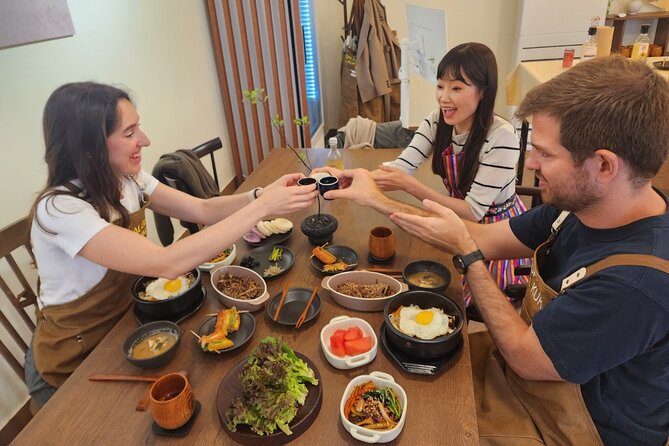
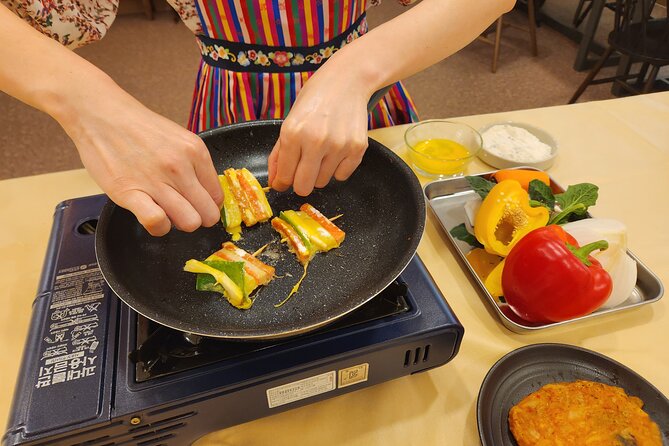
- Six full Korean dishes: Make hot stone bibimbap, bulgogi, japchae, doenjang-jjigae, kimchi pancakes, and vegetable skewers.
- Chef Jiny leads the class: Expect clear, step-by-step instruction designed for beginners as well as capable home cooks.
- A meal, not just a demonstration: You sit down together and eat what you prepared, with drinks, snacks, and traditional desserts included.
- Euljiro alley walk: The post-class stroll adds local stories, small businesses, and places that are easy to miss alone.
- Useful take-home material: You receive Korean recipes, photos from the class, and a small gift.
- Private format: Only your own group participates, making this a good choice for families, couples, or friends who want a relaxed pace.
A Seoul cooking class with a neighborhood walk attached
Many Korean cooking classes end when the plates are cleared. This one keeps going. The food lesson takes place first, followed by a walking tour through Euljiro, a central Seoul district known for its older workshops, narrow lanes, and changing streetscape.
That pairing gives the experience a sensible rhythm. You start indoors with a clear task, sit down for a generous meal, then stretch your legs while Jiny explains the area around you. It feels more connected to Seoul than a cooking lesson held in an isolated classroom.
The meeting point is on the second floor at 50-4 Chungmu-ro in Jung District. It is near public transportation, but you should allow time to find the entrance and reach the second floor. The activity returns to the same meeting point, so you will not need to arrange a separate ride at the end.
More Cooking Classes in Seoul
- Local Home Korean Cooking Class & Market Adventure in Seoul
★ 5.0 · 1,024 reviews - Master Korean traditional cooking with a Kimchi chef
★ 5.0 · 385 reviews - Seoul: Korean Cooking Class at a Local Home and Market Tour
★ 5.0 · 348 reviews
Tea, food culture, and the meaning of color
The class begins with a warm cup of traditional Korean tea. This is a small touch, but it helps set the pace. Instead of being rushed straight to a chopping board, you get an introduction to the day and to Korean food traditions.
Jiny explains ideas such as the importance of color harmony in bibimbap. That context matters because Korean food is not only about heat, salt, or fermented flavor. Presentation, contrast, texture, and balance all play a role. You learn what you are doing and why the dish is assembled in a particular way.
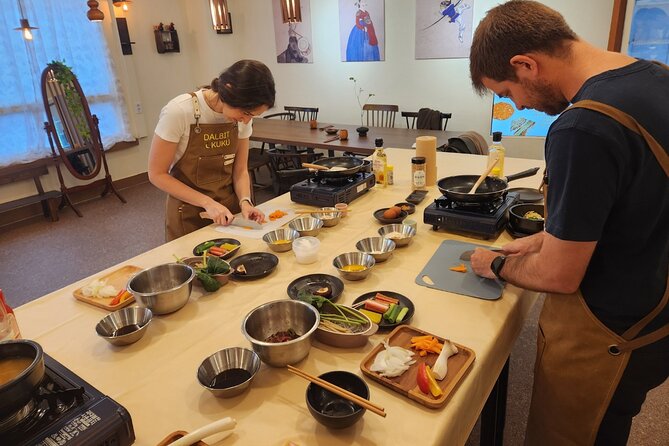
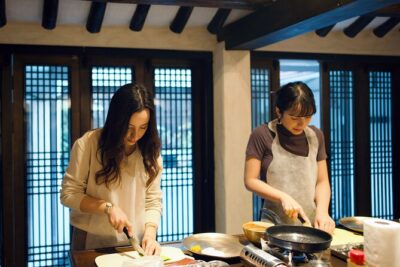
The studio combines older Korean design touches with a modern cooking setup. That makes it feel suitably connected to the subject without requiring you to work in an uncomfortable or overly formal setting. The kitchen has individual stations, and the space has been described as suitable for about ten people.
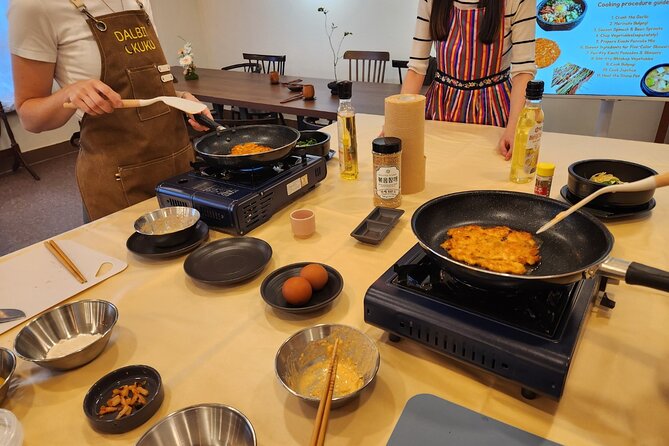
The instruction is built around participation. You put on an apron, handle the ingredients, and follow the recipe step by step. Jiny is especially good at making the process feel manageable. If you are not a confident cook, the class is structured to help you keep up. If you already cook at home, you can pay closer attention to technique and seasoning.
Six dishes, six different lessons
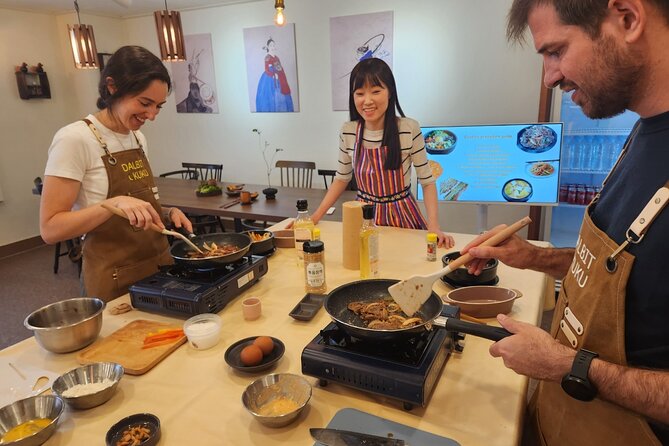
The menu gives you a broad introduction to Korean home-style cooking rather than focusing on one famous dish. The exact order can depend on the class, but you should expect to work on the following:
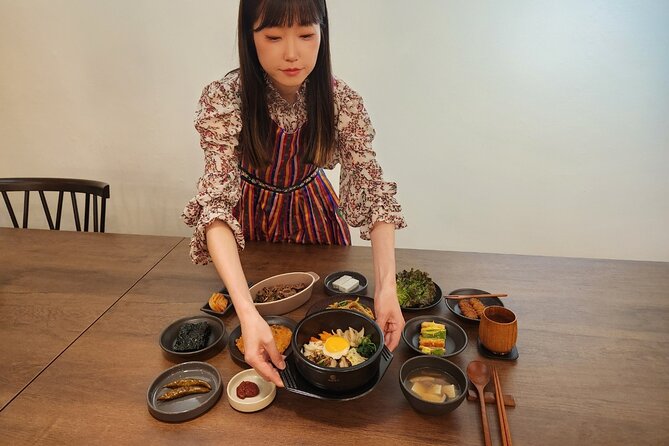
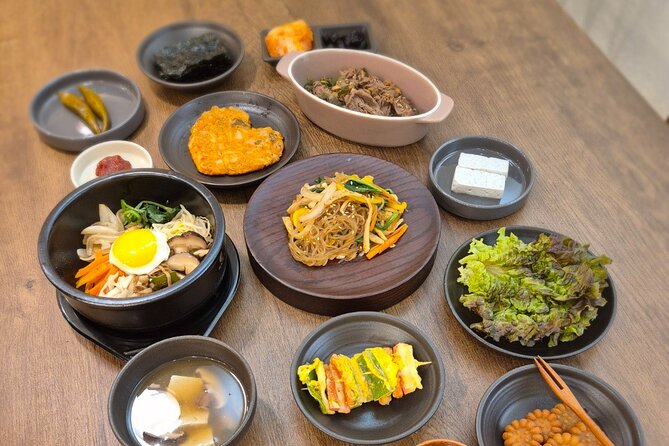
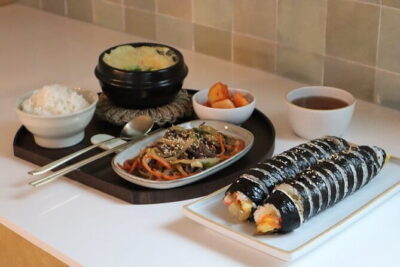
Hot stone bibimbap introduces the idea of combining rice, vegetables, meat, sauce, and color in one bowl. The hot bowl also adds a change in texture, helping create a crisp layer at the base. It is one of the most useful dishes to learn because the ingredients can be adapted at home.
Bulgogi gives you a lesson in Korean-style marinated beef. The appeal is not only the sweet-savory flavor. You also learn how the meat fits into a larger shared meal, alongside rice and other dishes.
Japchae brings a different texture to the table. The glass noodles are soft and springy, while the vegetables add color and bite. It is a good home-cooking recipe because it works as a side dish, a light meal, or part of a larger spread.
Doenjang-jjigae shows the savory side of fermented soybean paste. This stew adds warmth and depth to the meal and helps you understand why a Korean table often includes soup or stew alongside rice and other plates.
Kimchi pancakes are a practical lesson in turning a small number of ingredients into something crisp and satisfying. They are also fun to prepare because the final result feels immediate and easy to share.
Vegetable skewers, also called sanjeok in some descriptions of the menu, add another colorful element. They are particularly useful for seeing how Korean food can be arranged with care before it reaches the table.
Traditional Korean desserts are also part of the experience, though the specific desserts are not named. Drinks, beverages, and snacks are included as well. The result is not a sample-sized tasting. You should arrive hungry because this is intended to be a full meal.
Eating together after the cooking
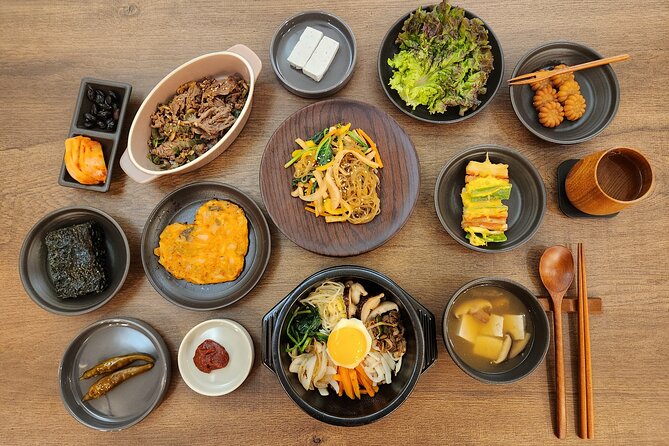
Once the cooking is finished, the group sits around the table and eats together. This shared meal is an important part of the class, not an afterthought. Korean food makes more sense when you see how separate dishes work as a complete table.
The meal also gives you time to compare what you made, ask follow-up questions, and enjoy the food without having to rush back to your station. Jiny and her husband are described as welcoming hosts, and the atmosphere is designed to feel more like a meal with a Korean family than a formal culinary exam.
The food is prepared in advance enough to keep the class moving, but each participant still has the chance to take part in all six dishes. That balance matters. You avoid spending the entire session on chopping, while still learning the main steps yourself.
Cleanup details are not specified, so do not book this expecting a fully hands-off demonstration. The class is meant to be active. That is its strength, but it also means you should be ready to stand, prepare ingredients, and participate for much of the session.
Other classes where you cook in Seoul:
- Seoul: Korean Cooking at Seoul Cooking Club!
★ 5.0 · 311 reviews - Korean Cooking at Seoul Cooking Club
★ 5.0 · 220 reviews - Korean Cooking Class with Grocery Shopping at Seoul Local Market
★ 5.0 · 107 reviews - Korean Kimchi Making Day Experience with a Local Market Tour
★ 5.0 · 99 reviews
Euljiro after the meal
The alley walk is what gives this activity its local character. After eating, Jiny takes you into Euljiro’s lesser-known lanes and points out places that are easy to overlook without someone who knows the district.
The area has a long working identity, and the walk focuses on its past and its changes. You may see small businesses and streets that feel very different from Seoul’s polished shopping districts. The appeal is not a list of famous monuments. It is the chance to notice ordinary details and hear the stories behind them.
This part also gives you a different way to understand the food class. Korean cuisine is connected to neighborhoods, markets, workshops, family habits, and daily routines. Walking through an older district after cooking helps place the meal in a wider setting.
Keep in mind that this is a neighborhood walk, not a major sightseeing circuit. If you want palaces, large museums, or a long list of landmark stops, you will need another tour. The alley portion is better for travelers who enjoy small details, local stories, and a slower look at Seoul.
The activity ends back at the original meeting point. A quiz and a small surprise gift finish the outing, and photos are provided along with the recipes. The photo service is useful if you want a record of the cooking without constantly stopping to take pictures yourself.
What the $85 price includes
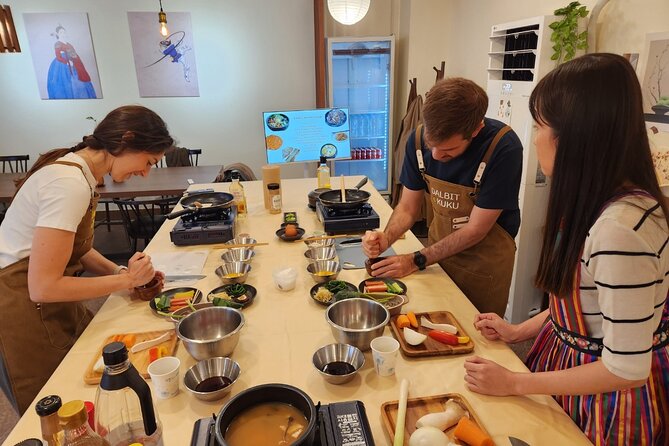
At $85 per person, this is not the cheapest way to eat in Seoul. It is also not simply a restaurant meal. The price covers approximately three and a half hours of instruction, ingredients for six dishes, a substantial meal, drinks, snacks, traditional desserts, the alley walk, a guide, recipes, photos, and a souvenir.
The value is strongest if you would otherwise pay separately for a food tour and a cooking lesson. You also leave with recipes you can try at home, which gives the experience some value after your trip ends.
The price is less appealing if you only want to taste Korean food or if you prefer a short, casual activity. You are paying for time, teaching, cultural explanation, and a private format. For a birthday, family outing, or small group activity, that added attention can make sense.
Private participation is a major advantage. Only your group takes part, so you are not placed with a large public tour. The studio can accommodate several cooking stations, but the supplied details do not guarantee a specific group size for every booking.
Who will enjoy this most
I would choose this for first-time visitors who want a clear introduction to Korean food without spending an entire day on a formal food tour. It also suits people who enjoy learning by doing rather than watching a chef work from a distance.
Couples, families, and small groups should find the private format comfortable. It is also a good birthday activity. One birthday booking received a small personal gift, although you should not assume that every special request will receive the same arrangement.
You do not need advanced cooking skills. The class is designed to suit different ability levels, and Jiny’s teaching style is patient and simple. Still, you should be comfortable participating in food preparation for several hours.
This may not be ideal for someone with a very tight schedule, limited mobility, or a strong dislike of group meals. The walk through Euljiro follows the cooking session, and the activity lasts about three and a half hours. Service animals are allowed, and the meeting point is near public transportation, but detailed accessibility information is not provided.
Practical details for a smoother visit
Book a time when you can arrive with an appetite. The food portion is generous, and you will enjoy it more if you are not already full from breakfast or an earlier lunch.
Wear comfortable clothes suitable for cooking and walking. An apron is provided, but the experience is still hands-on. You may also want shoes that feel good on city streets, since the second half takes place outdoors.
The ticket is mobile, and confirmation is provided at booking. Private transportation is not included, so you are responsible for reaching the Chungmu-ro meeting point and returning from there if you continue elsewhere.
Free cancellation is available up to 24 hours before the start time for a full refund. Cancellations or changes made less than 24 hours before the start time are not accepted for a refund, and the cut-off follows Seoul local time.
Should you book the cooking class and alley tour?
I would book this if you want a personal Korean food lesson with enough time to actually cook, eat, and ask questions. Jiny’s friendly instruction, the six-dish menu, the recipes, and the Euljiro walk give you more substance than a quick demonstration.
The choice is less clear if your main goal is sightseeing or if you have only a spare hour. The class takes a large part of the day, and the alley walk is about local atmosphere rather than headline attractions.
For food-minded visitors, families, couples, and anyone hoping to take a useful piece of Seoul home, this is a strong-value choice at $85. Plan around it, arrive hungry, and treat it as both a meal and a neighborhood introduction.
FAQ
Where does the Korean cooking class begin?
The experience begins at 2f, 50-4 Chungmu-ro, Jung District, Seoul, South Korea.
How long does the experience last?
The activity lasts approximately 3 hours and 30 minutes.
Which dishes will I prepare?
You will prepare hot stone bibimbap, bulgogi, japchae, doenjang-jjigae, kimchi pancakes, and vegetable skewers.
Is food included in the price?
Yes. The experience includes the food prepared during the class, lunch or dinner drinks and beverages, snacks, and traditional Korean desserts.
Is this a private activity?
Yes. Only your group participates in the activity.
What happens after the cooking class?
After the meal, you walk through lesser-known alleys in Euljiro, hear stories about the neighborhood, take part in a quiz, and receive a small surprise gift.
Do I receive recipes after the class?
Yes. A printed Korean recipe is included.
Are photos included?
Yes. Complimentary photos are included, along with the recipe and a special souvenir.
Can I cancel for a full refund?
Yes. You can cancel at least 24 hours before the experience start time for a full refund. Changes or cancellations made less than 24 hours before the start time are not accepted for a refund.
More Workshops & Classes in Seoul
- Yongpyong Ski Resort from Seoul with Optional Lesson and Packages
★ 5.0 · 217 reviews - Royal Seoul Cooking Class in a 100-Year-Old Hanok
★ 5.0 · 81 reviews - Seoul : Taste of Korea, Authentic Home-Style Cooking Class
★ 5.0 · 64 reviews - K-pop Dance Class in Seoul (Incl. video shooting & editing)
★ 5.0 · 52 reviews
Just added in Seoul
- Your Personal Seoul Photographer!★ 4.1 · 15 reviews
- You’re Invited to Our Home in Seoul: The Only Cooking Class!★ 5.0 · 8 reviews
- From Seoul: Yongpyong Ski Day Tour with Transportation★ 4.9 · 40 reviews
- Seoul: Korean & English Language Exchange Global Party★ 5.0 · 28 reviews
- From Seoul: Hwacheon Ice Fishing and Lighting Festival Tour★ 4.5 · 4 reviews
- Unique Native Experience : Han River Picnic, Board game, BBQ★ 5.0 · 3 reviews
- Seoul: Gangneung BTS K-Pop & K-Drama Filming Locations Tour★ 4.6 · 14 reviews
- K-Pop Making Class with a Producer!★ 5.0 · 3 reviews
Cooking Classes, compared.
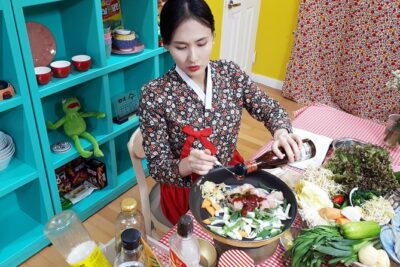
Local Home Korean Cooking Class & Market Adventure in Seoul
Read our review →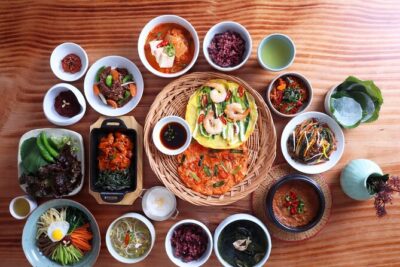
Master Korean traditional cooking with a Kimchi chef
Read our review →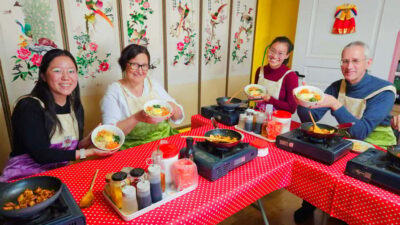
Korean Cooking Class at a Local Home and Market Tour
Read our review →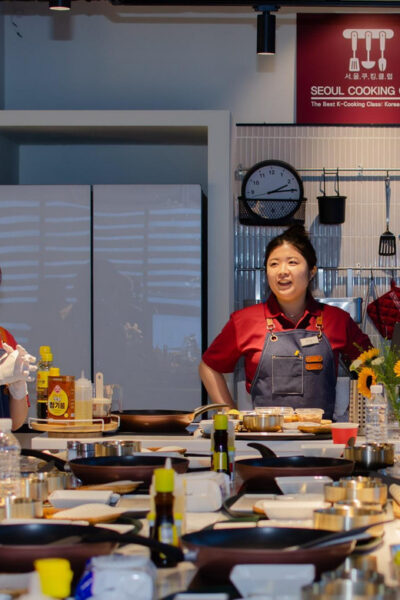
Korean Cooking Class with Grocery Shopping at Seoul Local Market
Read our review →
Korean Kimchi Making Day Experience with a Local Market Tour
Read our review →
Royal Seoul Cooking Class in a 100-Year-Old Hanok
Read our review →Browse the lists this tour appears in