
Reviewed · KOREAN FOOD & STREET FOOD TOURS
Seoul Vegan & Vegetarian Gwangjang Market Food Tour (11 Tastings)
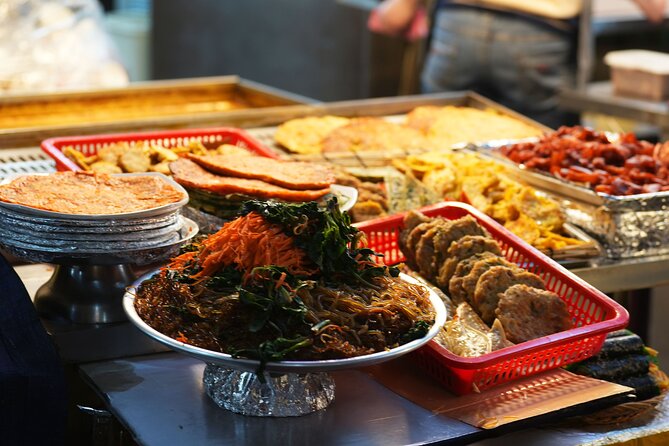
Gwangjang Market is one of Seoul’s best places to eat, but it can be a hard place for vegans to navigate alone. This evening tour solves that problem with 11 or more plant-based tastings, from vegetable mandu and tteokbokki to mung-bean pancakes and vegan-verified soju.
I like the careful ingredient research behind the route, and I like the small maximum of eight people. Guide Jungho handles ordering and translation, so you can focus on the food and market life instead of trying to explain dietary needs at every stall. The main drawback is that Gwangjang remains a working food market, so cross-contact can occur. This is not a safe choice for severe allergies or strict gluten-free diets.
Key points to know before you book
- At least 11 tastings: Food and drinks are included, with a wide mix of savory, spicy, crispy, chewy, refreshing, and sweet flavors.
- A fully plant-based route: The selected dishes contain no meat, fish, egg, dairy, or honey.
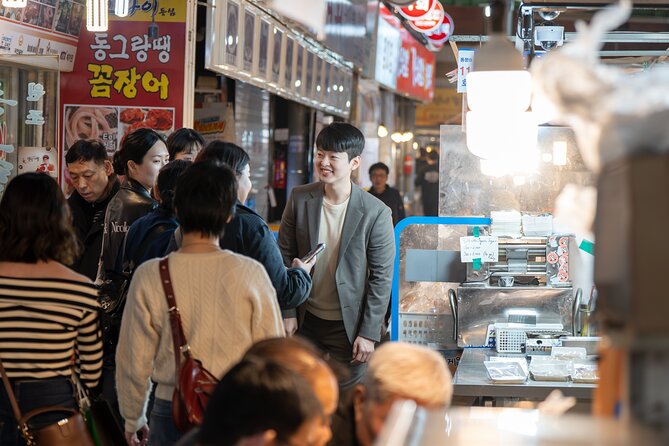
- Jungho handles the language barrier: He orders the food, checks ingredients, and explains Korean dining customs.
- Only eight people per group: The small size makes it easier to hear, ask questions, and stay together in the market alleys.
- A 5:30 pm start: The tour takes place in the evening and lasts about two hours, ending back at Jongno 5-ga Station.
- Know the limits: Cross-contact is possible, and the tour is not recommended for severe food allergies or gluten intolerance.
Why Gwangjang Market works so well for a vegan food tour
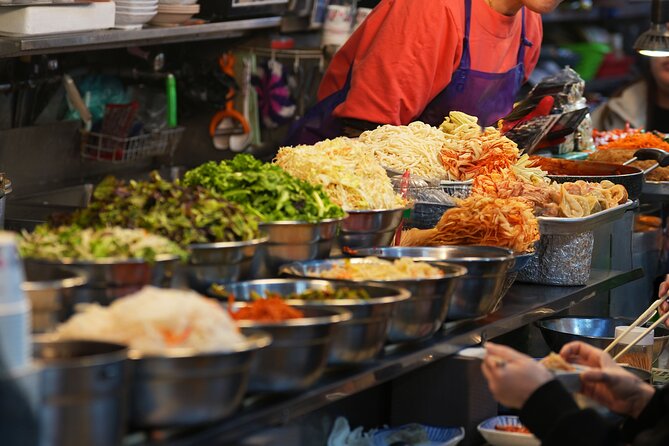
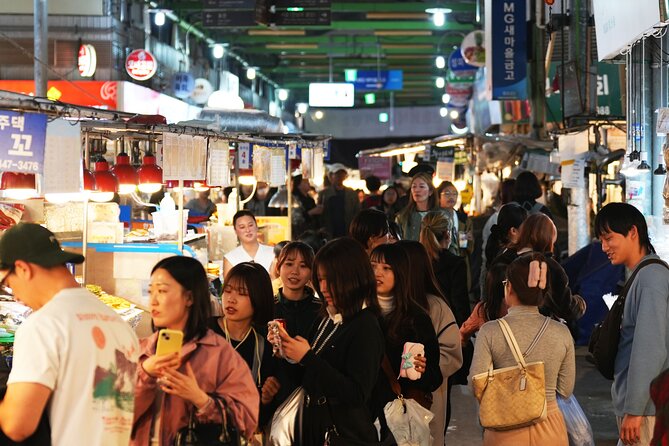
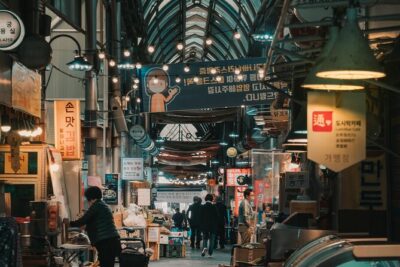
Gwangjang Market is not a quiet food hall designed for easy browsing. It is a busy, working market where cooks prepare food in front of you and customers eat at compact counters. That setting gives you a direct look at Korean food culture, but it also makes ingredient questions and special requests harder to manage.
For a vegan or vegetarian visitor, the difficulty is not just finding a dish that appears meat-free. Sauces, fillings, broths, toppings, and cooking methods can change the answer. Egg may be mixed into a batter. Fish products may appear in a sauce. Honey or dairy can turn up in a sweet.
Jungho’s role matters here. He spent more than a month checking ingredients and speaking with cooks before building the route for his own vegetarian family. He continued to check and adjust the food stops afterward. That preparation gives the tour a useful purpose: you can sample market food without stopping every few minutes to solve a language puzzle.
The experience is also designed for people who are new to Korean food. Jungho explains what you are eating, how it is prepared, and how it fits into Korean dining customs. If you already know Korean food, you still get the market versions of familiar dishes and the chance to ask about ingredients and local habits.
More eating your way around Seoul:
- Seoul: Gyeongbok Palace, Bukchon Village, and Gwangjang Tour
★ 4.9 · 2,321 reviews - Seoul Street Food Market Tour
★ 5.0 · 1,226 reviews - Seoul: Gyeongbok Palace, Bukchon Village, and Gwangjang Tour
★ 5.0 · 1,044 reviews
Starting at Jongno 5-ga Station at 5:30 pm
The meeting point is Jongno 5-ga Station, and the tour ends there after about two hours. Starting at a subway station is practical in Seoul, especially for a food outing that does not include hotel pickup or drop-off.
The 5:30 pm start places you in the market during the evening meal period. That timing should give you a lively view of the market at work, though it also means you should expect narrow paths and plenty of activity. Keep your belongings close and wear shoes that are comfortable for standing and walking.
The group is limited to eight people. That is a meaningful advantage in a crowded market. A large group can split up easily at a food counter, while a small group can stay near the guide and hear his explanations. It also gives you more room to ask about ingredients or cooking methods.
This is a walking and tasting tour, not a formal seated meal. The food comes in stages as you move through the market. You should arrive hungry but not completely empty, since the pace includes repeated samples rather than one large serving.
Vegetable mandu and the first taste of the route
One of the early tastings is hand-steamed vegetable mandu. Mandu are Korean dumplings, and the steaming method lets you focus on the filling and wrapper rather than on frying or heavy sauce.
The key value here is not only the dumpling itself. Jungho can explain how the filling is prepared and confirm which ingredients are used. For a vegan visitor, that extra check removes the guesswork that often comes with market food.
Mandu also gives you a gentle opening to Korean flavors. You can expect a soft wrapper, a savory vegetable filling, and a texture that contrasts with the crispier foods later in the tour. Since this is one of at least 11 tastings, you are not relying on one dish to represent the whole experience.
Tteokbokki brings the heat and chew

Tteokbokki is one of Korea’s best-known street foods, made with chewy rice cakes in a seasoned sauce. On this tour, you taste a plant-based version rather than simply watching other customers eat it.
The texture is part of the appeal. The rice cakes are springy and substantial, and the sauce adds heat and sweetness. If you are new to Korean food, this is a useful introduction to the way Korean dishes often combine strong seasoning with a distinct texture.
Spice levels can be personal, and the tour description does not promise an adjustment for every palate. If you are sensitive to heat, ask Jungho before tasting. The tour is built around selected market foods, so it is better to discuss concerns early than assume every dish will be mild.
A few more things to do in Seoul worth a look
- Vegan & Vegetarian Korean Market Adventure Gwangjang Market
★ 5.0 · 34 reviews - Vegan Korean Food Cooking Class: Gimbap, Sundubu Jjigae, and more
★ 5.0 · 32 reviews - Busan Tailored Korean cooking class (Vegan OK)with market tour
★ 5.0 · 66 reviews
Mung-bean pancakes show another side of market cooking
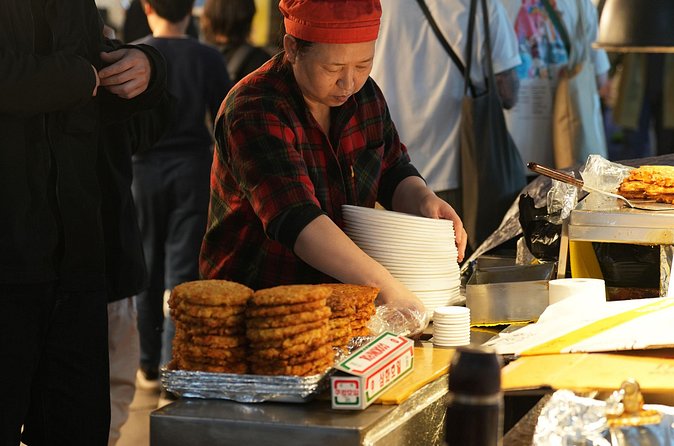
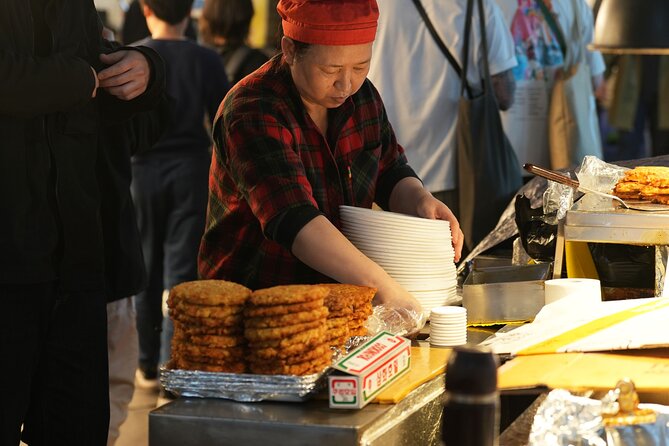
Crispy mung-bean pancakes add a fried, savory element to the route. Their appeal is the contrast between a browned outside and a softer interior. They also show how Korean market cooking can turn humble ingredients into food with plenty of texture.
For vegetarians and vegans, pancakes can be tricky because batter sometimes contains egg or seafood. That is exactly the kind of detail Jungho checks before bringing the group to a stop. The tour’s value comes from this ingredient work as much as from the eating itself.
You will not simply be handed a list of restaurant recommendations. You will taste food in the place where it is made, surrounded by stalls and cooks working through the evening. That connection gives the dishes more context than a standard plant-based restaurant meal.
Vegan soju and a sweet finish
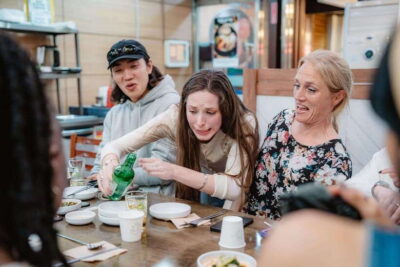
The tour includes a refreshing shot of vegan-verified soju. Soju is closely linked with Korean social dining, so including it gives you a small taste of the country’s drinking culture as well as its food.
The serving is described as a shot, not a full drink. If you do not drink alcohol, check with Jungho about the available alternative before the tasting. The tour includes bottled water, which is useful between spicy or salty dishes.
A sweet treat also appears among the tastings. The exact item can vary, and the available information does not name it, but its place in the route adds a useful change of pace. After dumplings, rice cakes, pancakes, and other savory bites, a sweet course helps the two-hour meal feel more complete.
What the food tells you about Korean market culture
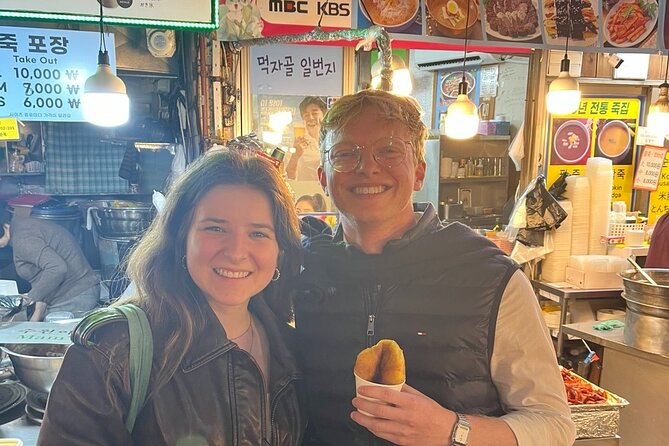
The tour includes more than samples. Along the way, Jungho talks about market culture, royal-court recipes, and local dining etiquette. These details help explain why certain foods are prepared and served the way they are.
The royal-court connection is especially interesting because Korean food is not one single style. Everyday market food can sit beside older culinary traditions, and ingredients may be prepared in very different ways depending on the dish. A short explanation at the right stall can make a familiar-looking food much easier to understand.
Dining etiquette is also practical information. You can learn how people order, share, and eat in a Korean market setting. That is useful if you plan to continue exploring Seoul’s food stalls on your own after the tour.
Jungho’s teaching style appears to be concise and friendly. He also welcomes questions, which matters in a food tour built around restrictions. You can ask about preparation rather than simply accepting a dish without knowing what is in it.
The value of a $89 plant-based market meal
At $89 per person, this is not a cheap way to grab a few snacks. You are paying for the food, the guide, translation, ingredient checks, route planning, and the convenience of trying more than 11 items in about two hours.
For a vegan visitor, that convenience has real value. Finding one clearly plant-based dish in Seoul may be manageable, but finding 11 safe options in a crowded market is a different task. The tour turns that research into a guided evening, with the food and drinks included from the start.
The price also makes more sense if you want cultural context. Jungho explains the dishes and market customs rather than simply pointing to each stall. You are paying for access to a tested route and for help navigating a setting that can be confusing on your own.
Still, you should compare the tour with your own priorities. If you are comfortable using translation tools, researching Korean ingredients, and eating at your own pace, you may prefer to explore independently. If you want a broad tasting menu with no meat, fish, egg, dairy, or honey, the fixed price is easier to justify.
The small group helps protect the value. With a maximum of eight people, this should feel more personal than a large food walk. The tour has received a five-star rating from 24 reviews, with 100 percent recommending it, but the practical question is still your diet and comfort with market conditions.
Who will enjoy this tour most
This experience suits vegan and vegetarian visitors who want Korean food beyond salads, fruit, or a plain bowl of rice. It is also a good fit for first-time visitors who do not know which sauces, fillings, and cooking methods to question.
Families can use it well because meat eaters can join too. The food is plant-based for everyone, but the mix of textures and flavors gives the group more to discuss than a single restaurant meal. A shared market walk also avoids splitting the group between separate menus.
It can work for people new to Korean cuisine and for those who have eaten Korean food elsewhere. If you already know dishes such as tteokbokki or mandu, you can compare the market preparation with versions you have tried before.
This is not the right choice for someone with a severe food allergy. The market is busy, and some cross-contact may occur even when the selected ingredients contain no animal products. It is also not suitable for strict gluten-free diets or gluten intolerance.
The tour is near public transportation, and most people can take part. Service animals are allowed. Since the activity ends where it begins, you do not need to arrange a second pickup point after dinner.
Booking details worth keeping in mind
The mobile ticket makes the meeting information easy to carry, and confirmation is provided when you book. You should plan to reach Jongno 5-ga Station with enough time to locate the meeting point before the 5:30 pm start.
Hotel transportation is not included. The tour begins and ends at the station, so factor your subway or taxi time into the evening plan.
Free cancellation is available up to 24 hours before the start time for a full refund. Changes or cancellations made less than 24 hours before the experience are not accepted for a refund, and the cut-off follows local Seoul time.
Should you book the Gwangjang Market vegan tour?
Book it if you want to eat widely and confidently in Gwangjang Market without spending your Seoul trip translating menus or questioning every cook. The strongest reasons are the careful plant-based route, Jungho’s help with ordering, the small group, and the number of included tastings.
Skip it if you need strict control over cross-contact, gluten, or allergens. Also skip it if you would rather browse alone and choose one or two foods at your own pace.
For most vegans and vegetarians who want an easy introduction to Korean market food, the $89 price is reasonable because it covers both the meal and the difficult research behind it. You leave with a better sense of what Korean market eating feels like, not just a list of foods you were able to avoid.
FAQ
Is the tour fully vegan?
The selected foods and drinks contain no meat, fish, egg, dairy, or honey. The route is designed for both vegans and vegetarians.
How many foods and drinks are included?
You receive at least 11 plant-based tastings. The tour includes dishes and drinks such as vegetable mandu, tteokbokki, mung-bean pancakes, vegan-verified soju, and a sweet treat.
How long does the tour last?
The experience lasts about two hours.
Where does the tour begin and end?
It starts at Jongno 5-ga Station in Seoul and ends back at the meeting point.
What time does the tour start?
The start time is 5:30 pm.
Is the tour suitable for severe allergies or gluten-free diets?
No. The market is a working food environment where cross-contact may occur. The tour is not recommended for severe food allergies, gluten intolerance, or strict gluten-free diets.
More Market Tours in Seoul
- Local Home Korean Cooking Class & Market Adventure in Seoul
★ 5.0 · 1,024 reviews - Seoul: Korean Cooking Class at a Local Home and Market Tour
★ 5.0 · 348 reviews - Cook 3 Authentic Korean Dishes with Local Market Tour
★ 5.0 · 231 reviews - Korean Palace and Market Tour in Seoul Including Insadong and Gyeongbokgung Palace
★ 4.0 · 174 reviews
More Food & Drink Experiences in Seoul
- Seoul: Night Market Food Tour with Local Guide
★ 4.9 · 943 reviews - Downtown Seoul Guided Food & Market Tour with 8+ Local Tastings
★ 5.0 · 580 reviews - Seoul Night Palace & Market Food Tour with Vehicle
★ 5.0 · 275 reviews - Seoul Fun Food Tour: 12 different food tastings
★ 5.0 · 266 reviews
Just added in Seoul
- Your Personal Seoul Photographer!★ 4.1 · 15 reviews
- You’re Invited to Our Home in Seoul: The Only Cooking Class!★ 5.0 · 8 reviews
- From Seoul: Yongpyong Ski Day Tour with Transportation★ 4.9 · 40 reviews
- Seoul: Korean & English Language Exchange Global Party★ 5.0 · 28 reviews
- From Seoul: Hwacheon Ice Fishing and Lighting Festival Tour★ 4.5 · 4 reviews
- Unique Native Experience : Han River Picnic, Board game, BBQ★ 5.0 · 3 reviews
- Seoul: Gangneung BTS K-Pop & K-Drama Filming Locations Tour★ 4.6 · 14 reviews
- K-Pop Making Class with a Producer!★ 5.0 · 3 reviews
Korean Food & Street Food Tours, compared.
Gyeongbok Palace, Bukchon Village, and Gwangjang Tour
Read our review →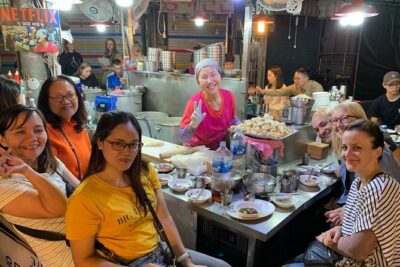
Seoul Night Palace & Market Food Tour with Vehicle
Read our review →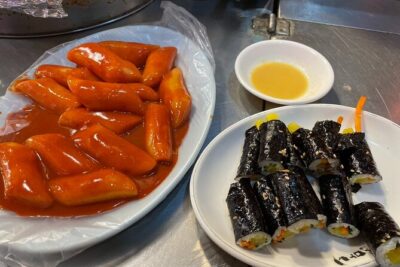
Seoul Fun Food Tour: 12 different food tastings
Read our review →
The Award-Winning PRIVATE Food Tour of Seoul: The 10 Tastings
Read our review →
Seoul Night Tour (Gwangjang Market, Royal Palace and Naksan Park)
Read our review →
Busan history and market food tour with local chef
Read our review →Browse the lists this tour appears in