
Reviewed · UNESCO WORLD HERITAGE TOURS
Gyeongju UNESCO sites Private tour with licensed tour guide
Gyeongju is where South Korea’s Silla past becomes wonderfully tangible: stone pagodas, grassy royal tombs, golden crowns, and a wooden bridge lit by the old capital’s memory. This private tour lets you cover the main sites without piecing together buses and taxis across a spread-out city.
I like the comfortable car and the freedom to shape the day. Guides such as Jino, Joy, Sang, Cynthia, and Jake have adjusted routes for children, older family members, luggage, lunch stops, and even family photos. The catch is simple: the day can be long and active, with plenty of walking and several hours on the road if you begin in Busan.
Key points to know before booking
- Bulguksa and Seokguram: Two major Silla-era Buddhist sites, both included in the core route.
- A full view of old Gyeongju: Tombs, artifacts, an observatory, a traditional village, and a reconstructed bridge round out the temples.
- Private vehicle and guide: Your group travels alone in an air-conditioned car or van with parking and tolls covered.
- Flexible timing: The tour runs about four to nine hours, with room to adjust the pace and stops.
- Useful for Busan stays: Pickup can be arranged in Busan or Gyeongju, with one-way options that work well when changing hotels.
- Walking matters: Most stops involve some time on foot, so this is not a sit-in-the-car sightseeing day.
Why Gyeongju works best with a private guide
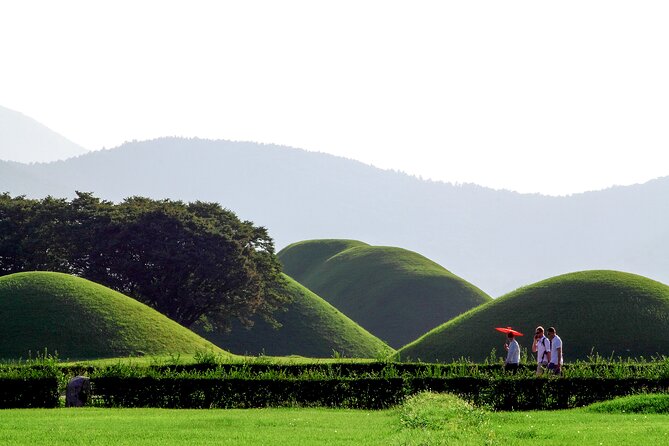
Gyeongju was the capital of the Silla Kingdom for nearly a thousand years, from 57 BC to AD 935. Its important places are spread across the city and surrounding hills rather than gathered in one compact historic center.
That geography is the main reason I see value in a private tour. You can move from Bulguksa in the southeast to the museum and tombs near the center without losing large chunks of the day to route planning. A guide also gives the stones and artifacts a timeline, so the temples, royal graves, and museum displays feel connected rather than like separate photo stops.
The private setup is especially useful for families. Sang has adjusted the pace for young children, arranged breaks, helped with a stroller, and provided child car seats for a group with very young children. Other guides have slowed the route for older adults or limited walking where possible. You still need moderate physical fitness, but you are not locked into the pace of a large group.
The usual duration is listed as four to nine hours. That is a wide range, and it matters. A four-hour version can focus on two temples or a smaller selection of central sites. A long day can cover nearly everything described here, especially if you start from Busan. Ask for the route that fits your time rather than treating every stop as compulsory.
More Silla-era sites from Gyeongju:
- Private Gyeongju Tour – Explore Gyeongju UNESCO Sites
★ 5.0 · 272 reviews - Busan: Gyeongju UNESCO Legacy Tour with National Museum
★ 5.0 · 172 reviews - Gyeongju: UNESCO Heritage Tour Including Bulguksa Temple
★ 4.8 · 104 reviews
Bulguksa Temple and the art of Silla Buddhism
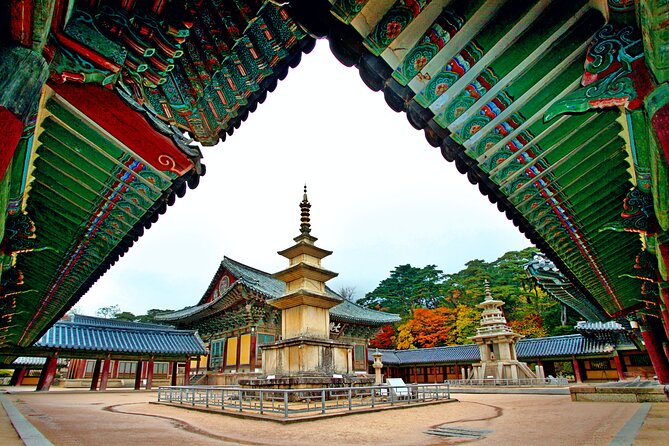
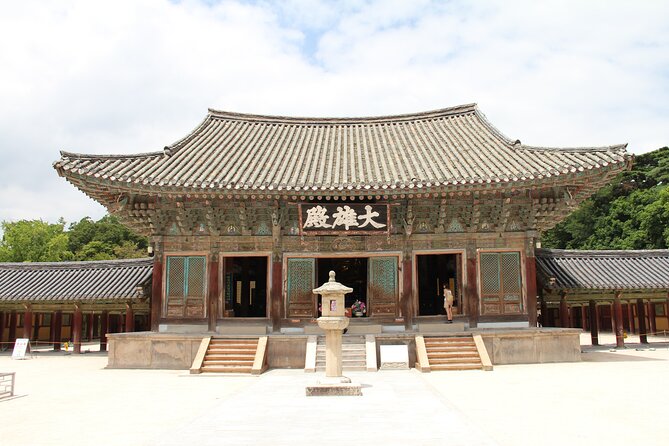
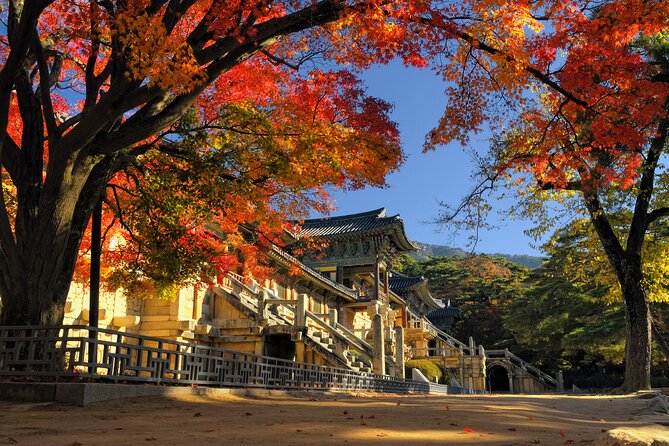
Bulguksa is the anchor of the day. Built in the eighth century, it presents the Silla Kingdom at its most refined, with stone stairways, pagodas, wooden halls, and carefully ordered courtyards.
Your guide can explain how the stone work and wooden structures fit together, and why the temple is valued as architecture as much as a religious site. I would give this stop more than a quick photograph. The details are easy to miss if you rush, especially when several buildings and sculpted elements compete for your attention.
The admission ticket is listed as free. That keeps the basic cost down, though the overall tour price reflects the private vehicle, driver, guide, parking, and time rather than entrance fees alone.
Bulguksa can be busy, and the temple grounds include steps and walking paths. The private format helps because you can spend longer at the parts that interest you and move on when younger children or tired legs have had enough.
Seokguram Grotto, a short mountain visit
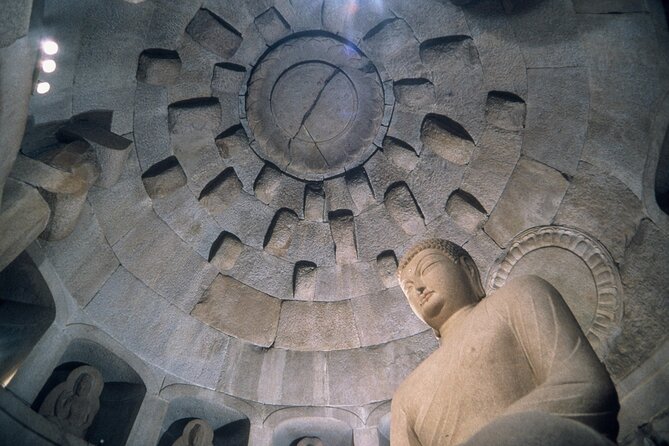
From Bulguksa, the route continues to Seokguram Grotto. This eighth-century Buddhist site is known for its granite Buddha and its mountain setting. The grotto is smaller and more focused than Bulguksa, but the craftsmanship gives it real weight.
The planned visit is about 40 minutes. That is enough for the main viewing experience, but not so long that you need to build an entire morning around it. The approach and walking make comfortable shoes useful.
Seokguram is also where transport earns its keep. Reaching a mountain site and then returning to the city is far easier in a private vehicle than trying to coordinate separate public transport connections. The attraction itself is not a long stop, so a guide who keeps the schedule moving can help you see more of Gyeongju afterward.
Daereungwon and the royal tombs
Daereungwon Tomb Complex changes the mood of the day. Instead of temple halls and mountain stonework, you walk among large grassy burial mounds linked to the Silla royal and aristocratic world.
The complex includes Cheonmachong, or Heavenly Horse Tomb, an excavated tomb where artifacts were found. This is a useful place to understand that the smooth green mounds are not natural hills. They are carefully built graves, and the objects recovered from them help explain the power and ceremony of the Silla court.
Plan on about 40 minutes. The paths are generally easier to manage than the temple steps, but you are still walking outdoors. Entrance is not included here, so allow for an additional ticket if applicable. The tour price does not cover meals or entrance charges that are not free.
A good guide can make this stop far more meaningful. Without context, you may see rounded mounds and take a few pictures. With an explanation of royal burials and the discoveries inside, the site becomes one of the clearest windows into ancient Gyeongju.
Other listed sites within reach of Gyeongju:
- Gyeongju UNESCO World Heritage Sites and History Full-Day Tour with Lunch
★ 5.0 · 104 reviews - Full day Private Gyeongju UNESCO Heritage Tour : a glimpse into Silla
★ 5.0 · 60 reviews - Private World Heritage Gyeongju Taxi Tour
★ 5.0 · 12 reviews - From Daegu: Gyeongju UNESCO Tour 7 Highlights with Bulguksa
★ 4.6 · 5 reviews
Gyeongju National Museum and the famous Silla treasures
The Gyeongju National Museum is the best indoor stop on the route. Its collections include more than 100,000 artifacts from the Silla Kingdom, including royal gold crowns and the large Emille Bell, described here as weighing about 20 tons.
The museum gives you the objects that the outdoor sites cannot. At Daereungwon, you see the tombs. Here, you see what came out of them. The combination helps you understand the skill, wealth, religious life, and political reach of the Silla court.
The scheduled visit is about 40 minutes, which is enough for a focused introduction but not enough for every gallery. If you are especially interested in archaeology or Korean art, ask your guide to help you choose the most important displays. If your group includes children, the museum also offers a quiet break from the road and the sun.
Admission is listed as free. The museum is one of the places where a guide’s explanations can save time, especially if you want a clear story rather than a long list of dates.
Cheomseongdae, a compact stop with a big claim
Cheomseongdae Observatory is a stone tower connected with the reign of Queen Seondeok, from AD 632 to 647. It is described as the oldest surviving astronomical observatory in Asia and rises about 9.17 meters.
The tower itself is a short stop, but it adds a different piece to the Silla story. The temples show religious life, the tombs show royal power, and Cheomseongdae points toward science and observation.
Because the time allocation is not specified, your guide can fit it around the rest of the day. It works well as a brief outdoor visit between the museum, village, and tomb area. You will not need a long stay to appreciate the shape, but you may want a few minutes to view it from different angles.
Gyochon Village and the Choi family legacy
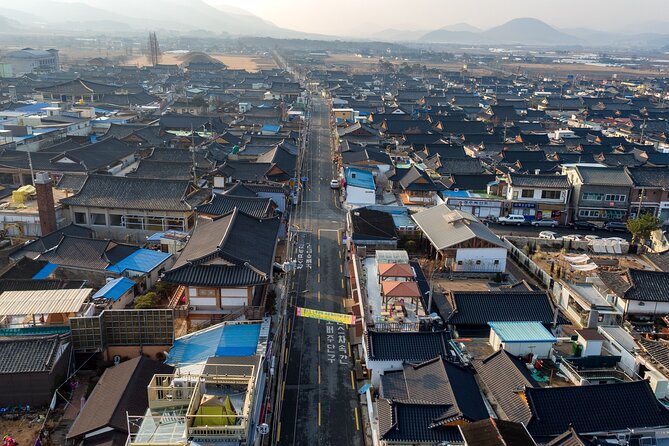
Gyeongju Gyochon Traditional Village offers a change from major monuments. The village is associated with the Gyeongju Choi Clan and its 12-generation legacy. Historic homes and traditional settings give you a closer look at elite family life and local customs.
This is also a practical place to pause for food, depending on the day’s schedule. Several guides have recommended local restaurants, and one group especially enjoyed a traditional meal near the House of Choi. Meals are not included, so any lunch or snack is paid separately.
The stop is planned for about 40 minutes. That is enough to walk through the village and look at the old homes, but not enough for a slow culinary exploration. Tell your guide if lunch matters to you. The private format makes a food stop easier to arrange than it would be on a fixed group itinerary.
Gyochon is valuable because it keeps the day from becoming a parade of famous monuments. You get a sense of domestic life and a more ordinary scale, even though the village remains a historic attraction.
Woljeonggyo Bridge, best saved for a slower look
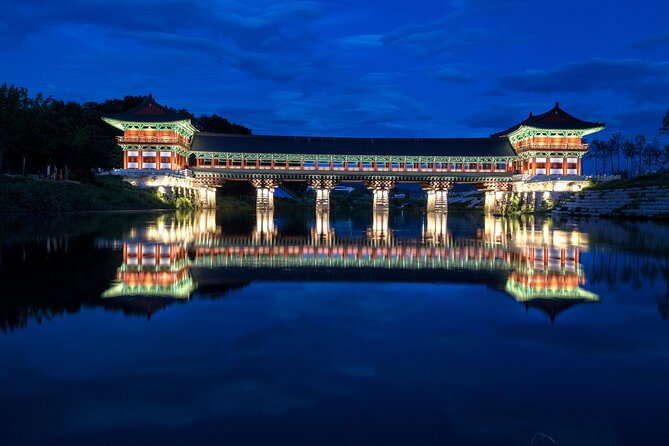
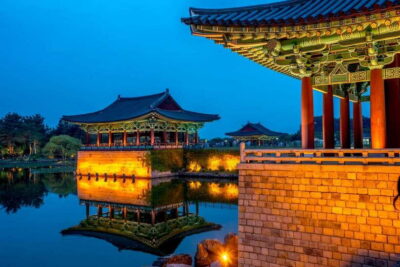
Woljeonggyo Bridge is a reconstructed wooden bridge first built in AD 760 during the Unified Silla period. It was destroyed during the Joseon dynasty and rebuilt between 2008 and 2018.
The planned visit is about 20 minutes. That may be enough for photographs and a short walk, but it is a compact introduction rather than a long riverside outing. The bridge’s rebuilt nature is worth keeping in mind. You are seeing a modern reconstruction based on an old Silla design, not an untouched eighth-century structure.
Still, it helps complete the picture of ancient Gyeongju. The bridge shows how movement, waterways, and grand public construction fit into the old capital. If your schedule allows, ask your guide about the best time for views, especially if your tour extends into the evening.
What the private car adds to the price
At $186.50 per person, this is not the cheapest way to see Gyeongju. The value depends heavily on group size and starting point.
For one or two people, the price may feel high compared with using local transport and visiting a smaller number of sites. For a family or group, the calculation improves because you are paying for a private vehicle, a licensed English or Chinese-speaking guide, parking, and tolls. Group discounts may also be available.
The Busan option adds another layer of value. The drive from Busan to Gyeongju takes about an hour, according to the tour information and direct experience described by participants. A guide can pick you up, cover the major sites, and in some cases drop you at accommodation in Gyeongju or back in Busan. One-way arrangements are particularly useful if Gyeongju is your next base.
The car is also a comfort upgrade. A clean vehicle, air conditioning, luggage space, and the ability to stop for a child’s snack or a bathroom break can matter more than a modest price difference. If you have only one day in the area, the time saved is part of what you are buying.
Guides, language, and the human side of the day
The guide assigned to you can vary, but the names associated with this experience include Jino, Joy, Sang, Cynthia, Jake, William, Lily, CK, Finn, and Soo-Hyeon Kim. English and Chinese-speaking licensed guides are offered.
The most useful quality to look for is not a memorized speech. It is the ability to adjust. Jino has tailored routes and helped limit walking for a traveler with mobility concerns. Joy has handled groups as large as nine and arranged a larger vehicle. Sang has kept teenagers interested, offered restaurant suggestions, taken family photographs, and made room for children’s needs.
Those details tell you how the day can work in practice. You can ask questions, change the pace, and request a lunch recommendation. You should still discuss special needs in advance, since the standard route includes several walking stops and the vehicle size may depend on your group.
The guide also fills in modern Korea, not just ancient dates. One group appreciated learning about Korean history, culture, and politics during the drives. That makes the transit time useful rather than dead time.
Timing, walking, and who should book
This tour suits you if you want to see many major Gyeongju sites in one day and prefer a guide who can connect them. It is a particularly good fit for families, first-time visitors to Korea, small groups, and anyone traveling between Busan and Gyeongju.
It is less suitable if you want a slow, single-site visit or dislike a full schedule. The long version can run close to eight or nine hours, and the route includes temple grounds, tomb paths, museum floors, village lanes, and outdoor monuments. Comfortable shoes are essential.
Older adults and people with limited mobility can still consider it, but tell the provider what you need before the day begins. The private setting allows some changes, yet it cannot remove every stair, hill, or walking path at Bulguksa and Seokguram.
The tour has free cancellation up to 24 hours before the start time. Changes or cancellations within 24 hours are not refunded, so keep that deadline in mind when arranging transport from Busan.
Should you book this Gyeongju tour?
I would book it if your priority is coverage, context, and easy transport. In one private day, you can see Silla Buddhist art at Bulguksa and Seokguram, royal tombs at Daereungwon, major artifacts at the National Museum, and the city’s historic village and bridge.
The strongest reason to choose this tour is flexibility. Ask for a shorter route if you have only four hours, or explain your family’s walking needs before pickup. If you are traveling with several people, the private vehicle and guide can make the price reasonable.
Skip it if you prefer independent wandering, have several days in Gyeongju, or want to spend hours inside the museum and temple grounds. For a limited visit, though, this is a practical way to meet the old Silla capital without wasting your day on transport.
FAQ
How long does the Gyeongju private tour last?
The experience lasts approximately four to nine hours, depending on the route and timing you choose.
Where can pickup be arranged?
Pickup is offered from Busan or Gyeongju. One-way tours are available, which can help if you are moving between the two cities.
Which languages are offered?
The tour includes an English or Chinese-speaking licensed tour guide.
Is transportation private?
Yes. Your group travels in a private, air-conditioned vehicle, with parking fees and tolls included.
Which main sites are included?
The route includes Bulguksa Temple, Seokguram Grotto, Daereungwon Tomb Complex, Gyeongju National Museum, Cheomseongdae Observatory, Gyeongju Gyochon Traditional Village, and Woljeonggyo Bridge.
Are entrance fees included?
Entrance fees are not included when applicable. Several stops are listed as free, while Daereungwon may require an additional ticket. Admission is free for people over 65 where applicable.
Is lunch included?
No. Meals are not included. Your guide can offer restaurant suggestions, and the private schedule may allow time for lunch.
Can children or older adults join?
Yes, but participants should have moderate physical fitness. The route includes walking, and the private format allows the guide to adjust pacing for children or older adults when possible.
Just added in Gyeongju
- Private World Heritage Gyeongju Taxi Tour★ 5.0 · 12 reviews
- Guided Car Tour in Geyongju with a Local Guide★ 5.0 · 38 reviews
- Gyeongju: Private Car Charter Taxi Tour★ 5.0 · 37 reviews
- From Busan: Gyeongju Small Group Photo Tour & Hotel Pick-up★ 5.0 · 3 reviews
- From Daegu: Gyeongju UNESCO Tour 7 Highlights with Bulguksa★ 4.6 · 5 reviews
- From Busan: Busan & Gyeongju One Day Tour★ 5.0 · 5 reviews
- Busan: 7 Highlights Gyeongju City One Day Tour★ 4.9 · 10 reviews
- Full day Private Gyeongju UNESCO Heritage Tour : a glimpse into Silla★ 5.0 · 60 reviews
UNESCO World Heritage Tours, compared.
Gyeongju UNESCO World Heritage Guided Day Tour
Read our review →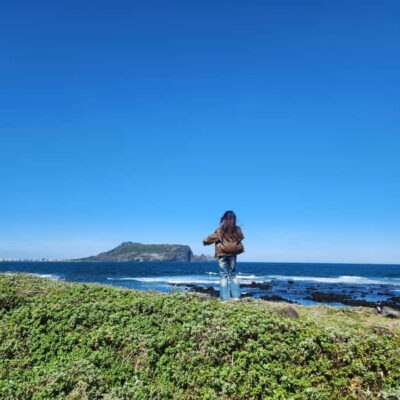
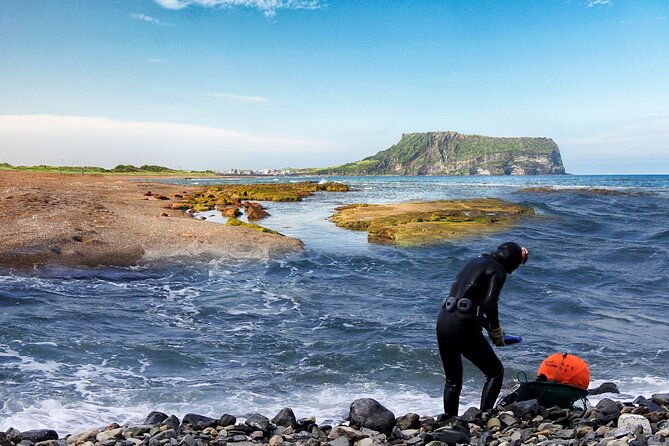
East Jeju Essentials – Seongsan Ilchulbong (UNESCO) & Haenyeo
Read our review →
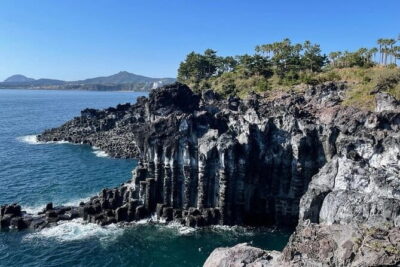
Jeju Southern UNESCO Full Day Tour with Mt.Halla
Read our review →
Private Gyeongju Tour – Explore Gyeongju UNESCO Sites
Read our review →
Jeju island Southern UNESCO Day Tour With Hallasan MT
Read our review →Browse the lists this tour appears in