
Reviewed · GYEONGJU UNESCO DAY TOURS
Echoes of Silla Gyeongju Historical Guided Day Tour from Busan
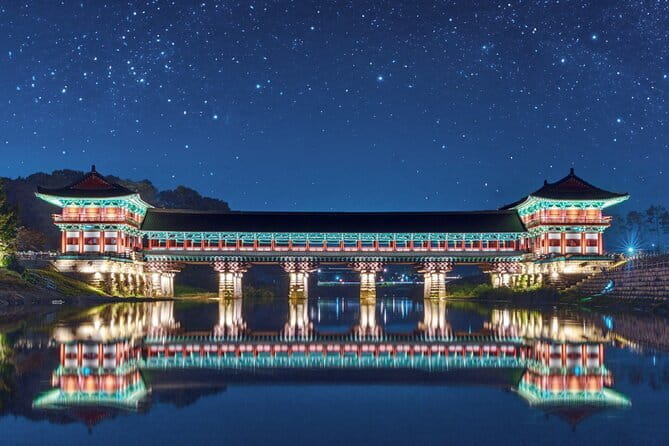
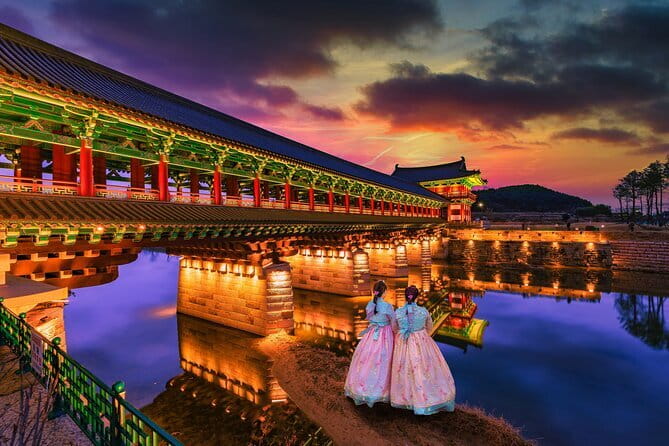
Gyeongju is South Korea’s best place to see the Silla kingdom in one concentrated day. This tour links a Buddhist temple, royal burial mounds, old hanok lanes, and evening monuments, so you get a clear sense of how the ancient capital was built and remembered. The evening visit to Donggung Palace and Wolji Pond, followed by the lit-up Woljeonggyo Bridge, gives the day a particularly graceful finish.
I like the mix of major sights and everyday culture. You move from Bulguksa’s grand stonework to Gyochon Village and Hwangnidan-gil, where old buildings now hold cafés and shops. I also like the guiding setup: English and Chinese-speaking staff, with guides including Lucy, Sophie, Bobby Kim, Amy, and Juna praised for clear storytelling and warm personalities. The catch is the length. At 10 to 11 hours, with road time from Busan included, this is a full day with little room for an unscheduled stop.
Key points to know before you book
- Bulguksa Temple opens the day with Silla Buddhist art, including a long visit of about two hours and 20 minutes.
- The tour covers six very different places, from royal tombs and hanok homes to modern cafés and night views.
- Gyochon Village and Hwangnidan-gil provide the main free time, including time to find food at your own cost.
- Donggung Palace and Wolji Pond are included, while other admission fees are not listed as included.
- Guides such as Lucy, Sophie, Bobby Kim, Amy, and Juna add a strong storytelling element, especially for travelers interested in Korean history.
- The maximum group size is 43, so the experience may feel more like a shared coach tour than a private outing.
Why Gyeongju makes a worthwhile day from Busan
Gyeongju was the capital of Silla, a kingdom that shaped much of the Korean Peninsula about 1,500 years ago. You do not need a detailed background in Korean history to enjoy this tour, but a little context helps: the city is not centered on one isolated palace. Its historic character is spread across temples, tombs, villages, bridges, and garden sites.
That makes a guided day useful. The stops are not simply a string of attractive photo spots. They show different sides of the old capital. Bulguksa explains Silla Buddhism. Daereungwon shows how rulers were buried. Gyochon gives you a feel for traditional housing and family life. Donggung Palace and Wolji Pond show the royal court at leisure.
At $64 per person, the value comes mainly from the transport and the amount covered in one day. A self-guided visit would require working out the route between Busan and several Gyeongju sites, then managing local transport and opening times. Here, an air-conditioned van or coach handles the movement, and travel between stops is built into the 10 to 11 hour schedule.
The price does not include meals or personal spending, so you should treat it as a sightseeing and transport package rather than an all-inclusive day. For a first visit to Gyeongju, that is a fair trade if you prefer a planned route and live explanations.
More Silla-era sites from Busan:
- Busan: Gyeongju Guided Day Trip to Three Kingdoms Capital
★ 4.8 · 1,925 reviews - From Busan: Gyeongju UNESCO World Heritage Guided Day Tour
★ 4.8 · 1,250 reviews - Gyeongju UNESCO World Heritage Guided Day Tour from Busan
★ 5.0 · 660 reviews
Bulguksa Temple: the right grand opening
The day begins at Bulguksa Temple, the tour’s longest stop at about two hours and 20 minutes. The temple was originally built in the eighth century and is recognized as a UNESCO World Cultural Heritage site. It is one of the key places for understanding Silla-era Buddhist architecture.
You can expect a large temple complex rather than a single building. Stone stairways, gates, courtyards, and decorative details give the site its visual force. The design asks you to look closely, not just take a quick picture and move on. The long time allocation matters here because the complex rewards a slower walk.
This is also the part of the day where a good guide can make a real difference. Details about the temple’s Buddhist meaning, construction, and place in Silla society are easier to follow when someone explains them as you move through the grounds. Bobby Kim is described as talkative and especially committed to telling the story of each location, while Sophie and Juna are also noted for making the history easy to follow.
The main practical drawback is that Bulguksa sets a demanding pace for the rest of the day. After more than two hours at the first stop, you still have five additional locations and the ride back toward Busan. If you prefer quiet, extended time at one temple, you may want a private visit instead. If you want a broad introduction, this generous first stop is a strength.
Gyochon Village and the Choi family story
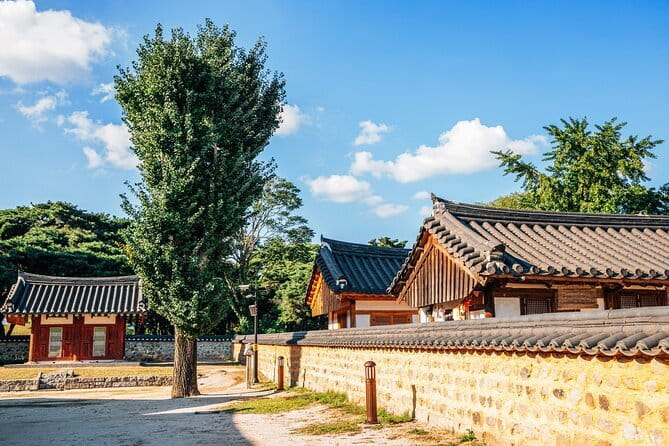
Gyeongju Gyochon Traditional Village receives about one hour and 40 minutes. The village centers on the Gyeongju Choi Clan, a family known for maintaining its wealth over 12 generations and producing influential figures.
The appeal here is more domestic than monumental. You see hanok houses and traditional settings that help explain how an established Korean family lived. The village also connects the ancient capital to later local history, showing that Gyeongju’s past is not limited to kings and temples.
This is a good place to slow down after Bulguksa. You can look at the architecture, explore traditional crafts, and take in the quieter lanes. The tour description also places lunch around the historic part of the day, but meals are not included. Bring money for food and use this stop, or the following Hwangnidan-gil visit, to eat at your own expense.
I would not expect Gyochon to feel like a large museum with every room open for inspection. Its value lies in the setting and the story of the family connected to it. The guide’s explanation helps turn a walk through old homes into a lesson about status, family, and local tradition.
Daereungwon’s royal tombs
Daereungwon Tomb Complex is a shorter stop of about 50 minutes. Its name is also translated as the Park of Royal Tombs, and the site contains 23 tombs from the Silla Dynasty.
The mounds are the main sight. They rise as rounded green forms across an open park, a shape that can seem simple until you understand that these are royal burial places. The scale and spacing create a calm setting, but the site also raises practical questions about what lies inside and how Silla society marked power.
Cheonmachong, also known as the Heavenly Horse Tomb, is one of the historically important tombs in the complex. It became especially significant after artifacts were found there, giving historians a closer look at Silla burial customs and royal life.
Fifty minutes is enough for an introduction and a walk among the main mounds, but it is not a long archaeological visit. Your guide’s storytelling will matter here because the tombs can look similar at first glance. Listen for the explanation of why the burial mounds were built this way and what discoveries revealed about Silla.
The stop also connects neatly with Hwangnidan-gil, which is next to the tomb complex. That saves time and gives you a sharp contrast: ancient burial mounds on one side, restored old-style buildings, cafés, and shops on the other.
A few more things to do in Busan worth a look
- Old Korea Thousand History Tour of Gyeongju from Busan
★ 5.0 · 518 reviews - Busan history and market food tour with local chef
★ 5.0 · 58 reviews - From Busan: Echoes of Silla Gyeongju Historical Day Tour
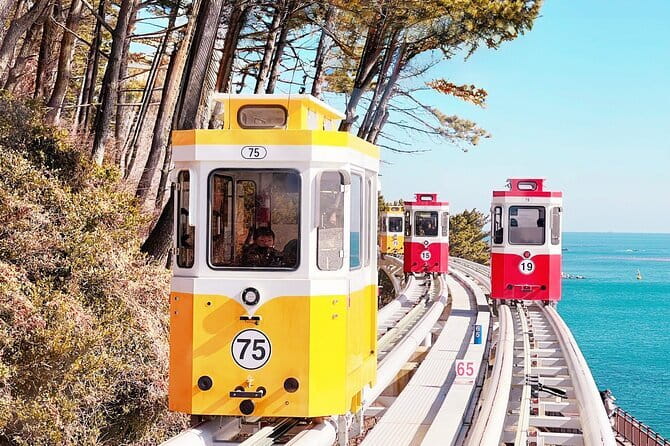
★ 4.8 · 55 reviews - Gyeongju Historic Areas Day Tour with Sky Capsule from Busan
★ 5.0 · 18 reviews
Hwangnidan-gil: old façades, new energy
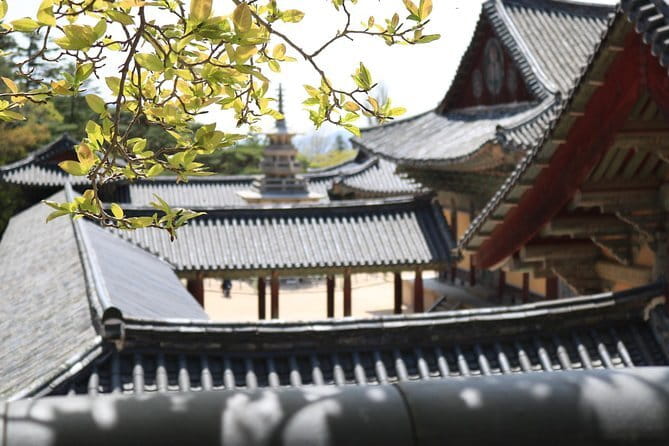
Hwangnidan-gil gets about one hour. This is Gyeongju’s fashionable street, where the city’s traditional look meets current food, coffee, and shopping culture.
You can find hanok cafés, specialty coffee, gourmet street food, and small shops. It is the least formal stop on the route, and that is exactly why it works. After temples and tombs, you get a chance to choose your own pace and see how Gyeongju presents its past to people today.
Do not expect an untouched old quarter. Hwangnidan-gil is a popular modern district using traditional-looking buildings and historic atmosphere. That may appeal to you if you want a break from formal sightseeing. If your goal is only original Silla remains, this will feel less essential than Bulguksa or Daereungwon.
One hour passes quickly, especially if you want lunch, coffee, and shopping. Since meals are not included, plan your spending before you arrive. You may want to skip a long café stop and focus on a quick local snack, since the final two locations are timed for evening views.
Donggung Palace and Wolji Pond after dark
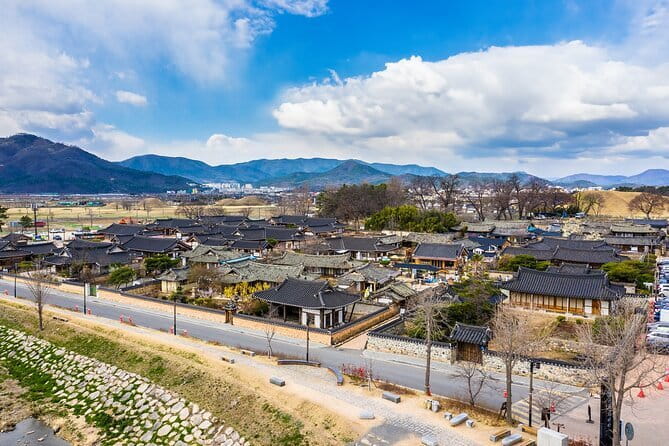
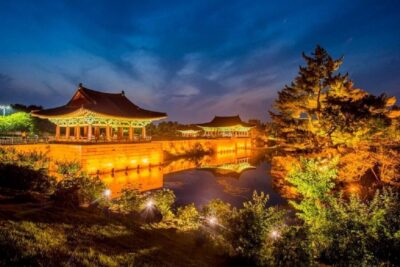
Donggung Palace and Wolji Pond is scheduled for about 40 minutes, with admission included. The pond was first constructed in 674 as part of a royal complex. In 1972, the water was temporarily drained, revealing thousands of Silla artifacts that had fallen into it.
The site is especially attractive as daylight fades. Water reflects the pavilions and surrounding lights, giving you a more peaceful experience than the busier daytime streets. The shorter visit works because the main pleasure comes from walking around the pond, viewing the structures, and hearing how the royal site was used.
This stop also brings together several themes from earlier in the day. You have seen religious architecture at Bulguksa, royal burial grounds at Daereungwon, and family life at Gyochon. Here, you see the court’s formal pleasure grounds and the material traces recovered from the water.
Forty minutes is enough for the principal view, but it leaves little time for a long circuit or quiet photography. Stay close to the guide and keep an eye on the meeting time. Traffic and weather can affect the order or length of stops, and the group still has one final location.
Woljeonggyo Bridge in the evening
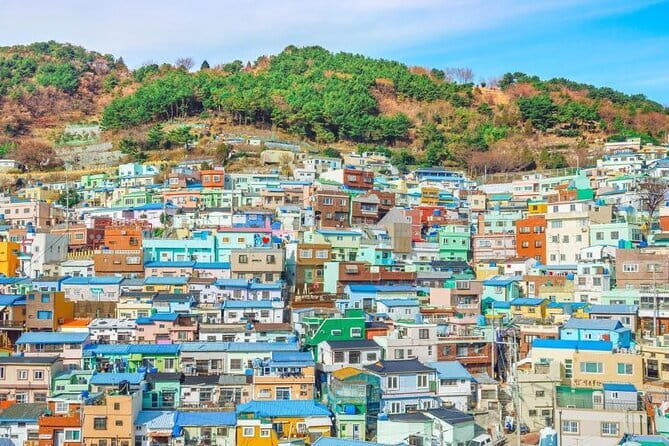
The final stop is Woljeonggyo Bridge, with about 20 minutes for a walk and photos. The bridge crosses Woljeongcheon Stream and is associated with centuries-old construction using stone arches.
At night, its lighting gives the structure a formal, almost theatrical look. The short visit is well judged for a final stop because you do not need a full museum-style explanation to appreciate the view. You can walk, take pictures, and let the day’s ancient sites settle into one last scene.
Twenty minutes is not enough for a long riverside stroll. Think of it as a closing viewpoint rather than another major attraction. The bridge is most useful as part of the complete route, especially after Donggung Palace and Wolji Pond, rather than as a reason to book the tour by itself.
How the guides shape the day
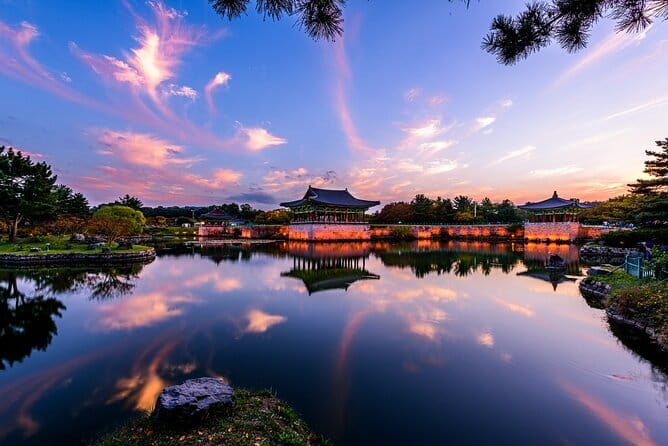
The strongest practical reason to choose a guided visit is the human explanation. The schedule moves quickly, and many sites can seem quiet or visually simple until someone explains what you are seeing.
English-speaking guides include Lucy and Sophie, while Chinese-speaking staff are also available. Bobby Kim is described as energetic and full of historical detail. Amy is noted for being helpful during the long day, and Juna for making the historical material fun and easy to follow. These details suggest that the guiding style can vary by departure, but the central benefit remains the same: you are not left to decode Silla’s monuments alone.
A guide also helps keep a large group moving. The maximum is 43 people, so this is not a private, flexible outing. Sophie is particularly associated with keeping the group organized while explaining the sites in clear English. That matters when the route includes several timed stops and an evening finish.
The long day from Busan
The tour lasts approximately 10 to 11 hours, including the time spent driving between sites. That is a major part of the decision.
You should choose it if you want to see Gyeongju during a limited stay in Busan and prefer one organized day. The air-conditioned transport removes the need to plan each connection. The mobile ticket is convenient, and the tour is near public transportation.
You should think twice if you dislike early starts, long road days, or fixed meeting times. The schedule includes six stops, and the itinerary can change with traffic and weather. You will have time at each place, but not complete freedom to linger.
Most people can participate, according to the provided activity information. Still, the amount of walking and the length of the day are worth considering for anyone who needs a slower pace. Ask the operator for any details not provided here before booking.
What to budget and what to bring
The $64 price includes transport by air-conditioned van or coach, English or Chinese-speaking staff, and admission to Donggung Palace and Wolji Pond. Other personal expenses are not included, and meals are not included.
I would budget separately for lunch, drinks, snacks, and anything you may want on Hwangnidan-gil. Comfortable shoes are sensible because the day combines temple grounds, village streets, park paths, and bridge walks. A phone is useful for the mobile ticket, and a light layer may help during the evening portion, though the activity information does not specify seasonal conditions.
Free cancellation is available if you cancel at least 24 hours before the start time. Changes or cancellations made less than 24 hours in advance are not accepted for a refund.
Should you book Echoes of Silla?
Book this tour if you want a broad, guided introduction to Gyeongju without arranging transport from Busan yourself. It is particularly well suited to first-time visitors, people interested in Korean history, and anyone who wants both major monuments and more relaxed streets.
The best parts are the clear progression from Bulguksa to the royal tombs, the contrast between Gyochon and Hwangnidan-gil, and the evening finish at Wolji Pond and Woljeonggyo Bridge. Guides such as Lucy, Sophie, Bobby Kim, Amy, and Juna can add the context that makes quiet ruins and burial mounds meaningful.
Skip it if you want a private pace, a deep visit to one or two sites, or a day without a long return journey. At $64, the tour offers solid value for covering so much ground, but you are paying for efficiency rather than complete freedom.
FAQ
How long does the Gyeongju tour from Busan last?
The tour lasts approximately 10 to 11 hours. Travel time between the stops is included in the total duration.
What places are included on the route?
The route includes Bulguksa Temple, Gyeongju Gyochon Traditional Village, Daereungwon Tomb Complex, Hwangnidan-gil Street, Donggung Palace and Wolji Pond, and Woljeonggyo Bridge.
Is admission included?
Admission to Donggung Palace and Wolji Pond is included. The provided information lists other personal expenses and meals as excluded, and does not list additional attraction fees as included.
Are meals included?
No. Meals are not included, so you should budget separately for lunch, drinks, and snacks.
What languages are available?
The tour includes English and Chinese-speaking staff. English-speaking guides named in the activity information include Lucy, Sophie, Bobby Kim, Amy, and Juna.
How large can the group be?
The tour can have a maximum of 43 participants.
Is the tour suitable for most people?
The activity information says most people can participate. You should still consider the 10 to 11 hour duration, travel between locations, and walking at temples, villages, tomb complexes, and bridge areas.
Can I cancel for a full refund?
Yes. You can cancel at least 24 hours before the experience start time for a full refund. Cancellations or changes made less than 24 hours before the start time are not accepted for a refund.
Just added in Busan
- Visit Busan night market and enjoy the night view of Busan harbor★ 5.0 · 6 reviews
- Real Busan Walking Experience★ 5.0 · 27 reviews
- Full Day Private car tour to UNESCO Gyeongju&Yangdong village★ 5.0 · 5 reviews
- Suncheon and Yeosu Daily Private Tour with Pickup Service★ 5.0 · 3 reviews
- 7 Highlights Gyeongju City One Day Small Group Tour from Busan★ 5.0 · 24 reviews
- Busan Seafood Tour : Oyster village Tour with Oyster cuisines★ 5.0 · 3 reviews
- Suncheon one day tour from Seoul, Busan or Suncheon★ 5.0 · 3 reviews
- 1 Day Private Busan Guided Tour★ 4.5 · 3 reviews
Gyeongju UNESCO Day Tours, compared.
Gyeongju Guided Day Trip to Three Kingdoms Capital
Read our review →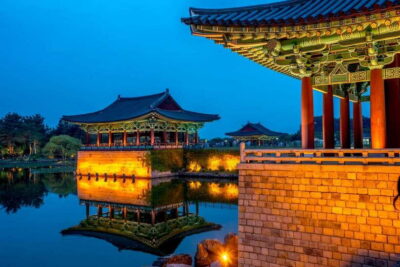
Gyeongju UNESCO World Heritage Guided Day Tour
Read our review →
Old Korea Thousand History Tour of Gyeongju from Busan
Read our review →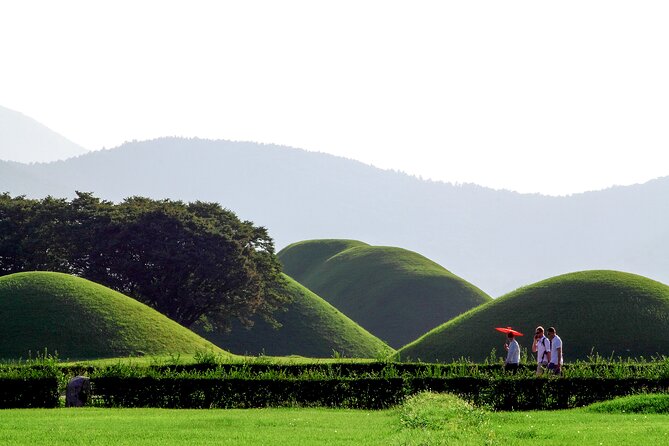
Gyeongju UNESCO sites Private tour with licensed tour guide
Read our review →
Private Gyeongju Tour – Explore Gyeongju UNESCO Sites
Read our review →
Gyeongju UNESCO Legacy Tour with National Museum
Read our review →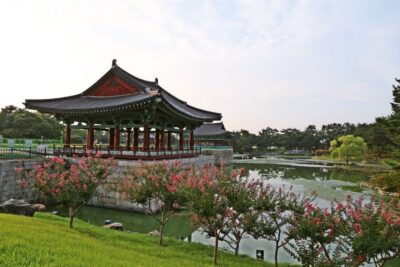
UNESCO Heritage Tour Including Bulguksa Temple
Read our review →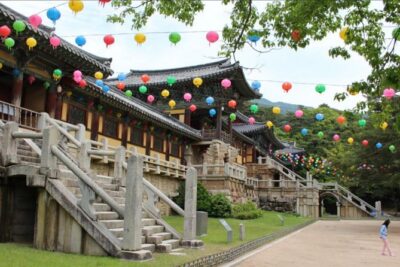
Gyeongju UNESCO World Heritage Sites and History Full-Day Tour with Lunch
Read our review →Browse the lists this tour appears in